
The Longevity
Updated: Dec 24, 2025
For thousands of years, the Long(1) has been defaulted as the paramount symbol of power, a familiar presence in our collective consciousness. Among the Zodiac animals, the Long stands as the most extraordinary.
We believe that beneath the majestic and imposing image of the Long lies a deeper root meaning: a vestige entrusted to us by our ancestors. This is why we have raised the question of origins as a conceptual theme for this product: not to resurrect a symbol, but to preserve a forgotten notion.
Qua hàng ngàn năm được mặc định là biểu tượng tối thượng của quyền lực, con Rồng đã trở nên quen thuộc. Trong 12 con Giáp thì Rồng là con vật phi thường nhất.
17.5 tin rằng, ẩn sâu dưới hình tượng Rồng uy dũng, vẫn còn một tầng nghĩa cội rễ, một tàn tích mà tổ tiên đã gửi gắm. Đó là lý do chúng tôi đã khơi mào nên câu hỏi về xuất xứ như một chủ đề sản phẩm giả lập không nhằm để hồi sinh một biểu tượng, mà là để giữ lại một ý niệm đã bị lãng quên.
The First Loongs(2)
The first Loongs did not appear in paintings, books, or palaces.
They were found within an 8000 year old site at Chahai (Liaoning, China); and amidst the untamed fields of Xishuipo (Henan, China), where the deceased was flanked by over 2000 clam shells arranged in the shape of a dragon. Nearly 2 meters long, it lay opposite a tiger symbolizing the balance of Yin and Yang, Heaven and Earth. (3) This may be the earliest dragon image humans ever created, not through words, but through matter, ritual, and primitive astronomy. This was not a mythological image, but a funeral rite. Humanity's First Loong was a rite of passage through death.(4)

Con Rồng đầu tiên
Trước khi con người biết viết, họ đã vẽ Rồng.
Trước khi rồng bay lên trời, nó từng nằm im lặng dưới lòng đất – như một giấc mộng chưa gọi thành tên.
Những con rồng đầu tiên không xuất hiện trong tranh vẽ, sách vở hay cung điện.
Nó nằm ở một di chỉ 8000 năm tuổi tại Tra Hải (Liêu Ninh, Trung Quốc) và nằm giữa cánh đồng hoang ở Tây Thủy Pha (Hà Nam, Trung Quốc) – nơi có người chết được vây quanh bởi hơn 2000 vỏ sò xếp thành hình rồng. dài gần 2 mét, nằm đối xứng bên một hình hổ – tượng trưng cho sự cân bằng âm dương, thiên địa.(3) Những hình ảnh này có thể là hình tượng rồng sớm nhất con người từng tạo ra, không phải bằng từ ngữ, mà bằng vật chất, nghi lễ và thiên văn học sơ khai. Đây không phải một hình ảnh thần thoại, mà là một nghi thức tang lễ. Những con Rồng đầu tiên của nhân loại là một nghi thức đi qua cái chết.(4)


There was no throne, no gold or jewels, only the primitive projection of astronomy, the Four Symbols, the Big Dipper, and an intuition that life does not end when the heart stops beating.(3) The Loong was not born of imagination. It was born of the desire to continue living in another form. The traces of the Loong do not start from a single point; the spirals, the undulations, the beast-head with a snake-body carrying the souls of the snake, fish, bird, and tiger etc.. appear scattered across ancient cultures.(5)
Legend has it that when the era of wet-rice agriculture began, kings adopted the dragon image to represent themselves, serving a function of governance.(5) It is also said that when the Yellow Emperor (Xuanyuan) unified the tribes, he perfected a supreme image from the totems of different tribes using different animals.(7) If it bears the form of a creature too specific, it is not a Loong.(4)
Không có ngai vàng, không có vàng bạc châu báu – chỉ có ánh xạ thiên văn sơ khai, Tứ Tượng, Bắc Đẩu, và một linh cảm rằng sự sống chưa dừng lại khi tim ngừng đập.(3)
Rồng không sinh ra từ trí tưởng tượng. Nó sinh ra từ khao khát được tiếp tục sống – dưới một hình hài khác. Dấu vết của Rồng không chỉ bắt đầu từ một điểm duy nhất, những hình xoắn, hình uốn lượn, đầu thú mình rắn - mang linh hồn của sấu, đà, chim và hổ – xuất hiện rải rác khắp các nền văn hóa cổ đại. (5)
Tương truyền khi đến thời làm nông cấy lúa, vua chúa đã lấy hình tượng rồng để tiêu biểu cho mình, như một chức năng trị dân trị nước.(5) Cũng tương truyền rằng khi Hoàng Đế Hiên Viên tiến hành hợp nhất các tộc, người đã hoàn thiện cho hình một hình ảnh tối thượng từ tộc huy của các bộ lạc khác nhau bằng những con vật khác nhau. (7)
Nếu nó mang hình hài một con vật quá cụ thể, thì nó không phải là con rồng.(4)

The Ancestral Long
If the people of the North later used the Loong to embroider royal robes as a symbol of power, our ancestors tattooed the Long onto their skin.(8) That cultural flow drifted South where the ancient Bach Viet communities resided along the Truong Giang and Song Hong. From early sites like Bai Lien Dong and Son Vi to the peak of the Dong Son culture, the Long gradually transformed from a mysterious funeral symbol into a Totem.(5)
It is no coincidence that agricultural peoples tied to water, rice, and the sky all speak of the Long. It is the creature of thunder, rain, lightning, constellations, and the natural order.(9) The Dragon has never been a simple animal. It is the crystallization of Snake – Fish – Bird – Tiger..(10) Just as we humans are the crystallization of Plains – Mountains – Oceans – Starry Skies.
Con Rồng Cha Ông
Nếu người phương Bắc sau này dùng Rồng để thêu lên áo Vua như biểu tượng của quyền lực, thì tổ tiên chúng ta đã xăm hình Rồng lên da thịt.(8) Dòng chảy văn hóa ấy xuôi về phương Nam – nơi cộng đồng Bách Việt cổ cư trú dọc lưu vực Trường Giang và Sông Hồng. Từ những di chỉ sơ khai như Bái Liên Động, Sơn Vi cho đến đỉnh cao Đông Sơn lần lượt trỗi dậy, Rồng dần chuyển hóa từ một biểu tượng tang lễ bí ẩn thành vật tổ.(5)
Không phải ngẫu nhiên, các dân tộc nông nghiệp gắn với nước, lúa, trời đều nói chuyện về Rồng. Nó là sinh linh của sấm sét, mưa, ánh chớp, chòm sao và trật tự thiên nhiên.(9)
Rồng chưa bao giờ là con vật đơn giản. Nó là kết tinh của rắn – cá – chim – hổ...(10) Giống như chúng ta là kết tinh của đồng bằng – núi rừng – biển cả – trời sao.

The Longevity
Each year, we select a mascot to contemplate, serving as a pretext to exchange well-wishes. If the Long bears the mission of eternity, 17.5 rejects the overly familiar imagery of royalty and instead decides to seek the most primal origin of this concept.
Con Rồng Trường Thọ
Mỗi năm, 17.5 chọn một linh vật để suy tưởng, như một cái cớ để nói với nhau vài lời chúc. Nếu Rồng mang sứ mệnh của sự vĩnh hằng, thì 17.5 từ chối hình ảnh vương quyền đã quá quen thuộc, mà quyết định tìm về nguồn gốc nguyên sơ nhất của ý niệm này:
Form - We combine antlers, whiskers, and claws from real beasts. It bears the mark of amalgamation. Lying low to the ground, it threatens no one. This is a posture of concealment and grounding: listening to Mother Earth and hidden waters.
Hình Khối: Chúng tôi quy ước cụ thể lại chi tiết sừng hươu, râu dài, móng vuốt sắc nhọn của các sự đa dạng động vật có thật. Con rồng này phải mang dấu vết của sự kết hợp.
Tư thế này không mang tính đe dọa hay phô trương quyền lực. Đó là tư thế của sự ẩn mình và kết nối. Rồng nằm sát đất để lắng nghe nhịp thở của Đất Mẹ và sự vận hành của các mạch nước ngầm.
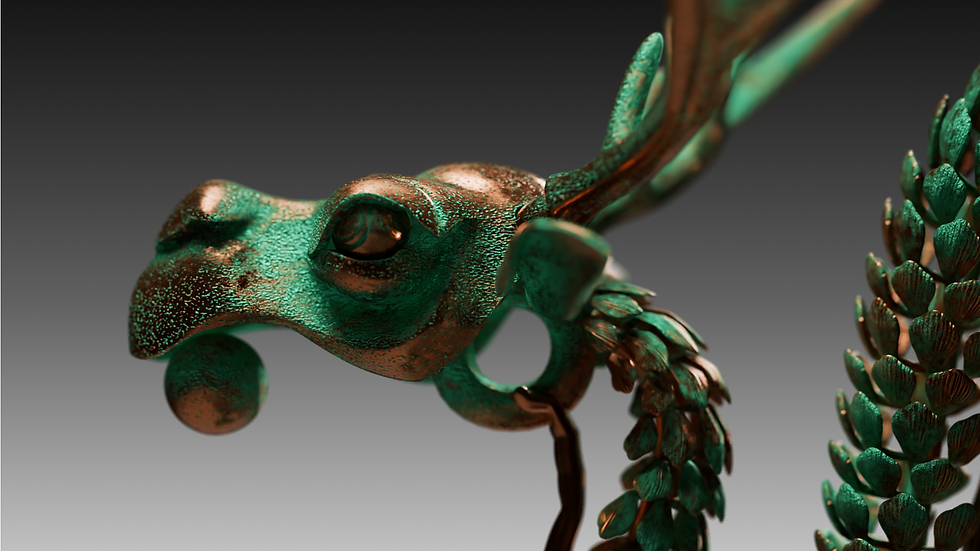
Material - Instead of smooth casting, we use meticulous layering. Like a silversmith nurturing a tree, we build raised scales to mimic organic reptile skin. The finish is rough and patinated, marking maturity and time. Soft tissues remain polished to symbolize the eternal.
Chất Liệu: Thay vì đúc khuôn trơn láng, chúng tôi sử dụng kỹ thuật ghép mộng - một quy trình tỉ mỉ như cách người thợ bạc vun trồng từng nhánh cây thông, thủ công và cần mẫn với từng lớp vẩy nổi để hoài thai nên bề mặt vật mẫu hữu cơ mô phỏng kết cấu thân rắn và da cá sấu. Sản phẩm cuối cùng sẽ có bề mặt sần sùi, thô ráp, lồi lõm qua quá trình để ố tự nhiên.
Sự lấp lánh vĩnh cửu của chất liệu khác nằm ở các bộ phận mô mềm của rồng, diễn tả sự mềm mại và mang tính ước lệ.

Function - This is not merely a display piece. It is designed as a Paperweight or Meditation Object. Touching its cold, rough scales connects you to the ancient Gnomon.
Công Năng: Đây không chỉ là một vật phẩm trưng bày. Nó được thiết kế như một trấn chỉ (Đồ chặn giấy) hoặc vật phẩm thiền đặt trên bàn làm việc.
Khi bạn chạm tay vào lớp vỏ sần sùi lạnh lẽo của kim loại, sờ vào bàn chân của rồng, đó là lúc bạn chạm vào một nguyên lý cổ xưa liên quan tới thời gian: khuê biểu.

The ancients taught: "Stars in the sky are for the night; by day, one must look to the ground."
Before clocks existed, humans used their own feet as gnomons to measure shadows, determining the hour and the season. The Long's foot touching the earth is not just stability. It is an anchor for the rhythm of time. Amidst the hurried flow of modern life, you allow your hands to rest, evoking a sense of permanence in your consciousness.
Người xưa dạy rằng: "Sao trên trời để nhìn ban đêm, còn ban ngày phải nhìn xuống đất."
Trước khi có đồng hồ, con người từng dùng chính chân mình làm cọc tiêu đo bóng nắng để biết giờ, biết mùa. Bàn chân rồng chạm đất không chỉ là sự vững chãi. Đó là điểm neo giữ nhịp thời gian. Giữa dòng chảy vội vã của cuộc sống hiện đại, bạn cho phép mình nghỉ tay, gợi nhắc về sự trường tồn trong tâm thức mình.
Đầu Năm Giáp Thìn, 17.5 không chỉ làm rồng. Mà còn kể lại hành trình truy tìm một giấc mơ chưa gọi thành tên.
This Year of the Dragon (Long), 17.5 retells the journey of an unnamed dream. Wishing you a Prosperous Year.
Yours Sincerely.
Chúc quý bạn Long Niên Hưng Vượng.
Trân trọng.
Creative Disclaimer: For aesthetic and conceptual inspiration only. Not intended for academic or educational purposes.
References & Citations
The term "Long" is used here to distinguish the Vietnamese water-spirit totem from the Western concept of the "Dragon." The Long represents benevolence, agricultural prosperity, and royal authority, contrasting with the often malevolent nature of western mythical beasts.
While sharing similar East Asian roots, we use the Sino-Vietnamese spelling "Long", distinct from "Loong"—the Pinyin romanization specifically referring to the Chinese creature.
Archaeological Site at Xishuipo (Tomb No. 45); Keyword: Xishuipo M45.
https://quod.lib.umich.edu/u/umdvrc1ic/x-d08-12253/d08-12253https://www.chinadaily.com.cn/a/202402/09/WS65c57b54a3104efcbdaea88c_6.html
Allan, Sarah (ed), The Formation of Chinese Civilization: An Archaeological Perspective
https://inf.news/en/news/695086379059b66f227f0ddc65d361b8.html
Propp, Vladimir. Les Racines historiques du conte merveilleux (The Historical Roots of the Wonder Tale). Leningrad, 1946; Gallimard, Paris, 1983.
https://luocsutocviet.com/2019/06/20/329-di-tim-nguon-goc-con-rong/
Dragon Imagery in Ancient East Asian Culture (Reference from Luoc Su Toc Viet). https://luocsutocviet.com/2021/06/15/538-hinh-tuong-rong-trong-van-hoa-co-a-dong/
Selection of Strange Tales in Lĩnh Nam/ Linh Nam Chich Quai
Sima Qian, Records of the Grand Historian (Shiji). Chapter 1: "Annals of the Five Emperors." (Records of the Yellow Emperor/Xuanyuan defeating the Flame Emperor at Banquan and Chiyou at Zhuolu, thereby unifying the tribes of the Central Plains)./ Su Ky Tu Ma Thien - Ngu De Ban Ky
The Tale of the Hong Bang Clan /Truyen Ho Hong Bang
Huynh Thieu Phong https://luocsutocviet.com/2018/06/04/086-tim-ve-von-van-hoa-co-viet-nam-qua-nghien-cuu-bieu-tuong-rong/
Nguyen Ngoc Tho (2016) Long Imagery in Eastern Culture. National Political Publishing House, pp. 27-30. /Nguyen Ngoc Tho (2016) Hinh tuong rong trong van hoa phuong Dong, NXB Chinh tri Quoc Gia, tr.27-30.


Comments